The rewrite that never ships
The pattern is familiar. A core system has grown slow to change and fragile to run. Engineers propose a rewrite. Leadership agrees, because it sounds decisive. A year later the new system handles some of the work, the old one still handles the rest, and the team now maintains both. Product work slowed the whole time.
Ward Cunningham, who coined the term, described debt as the cost of shipping with understanding that later needs to be repaid by refactoring; the danger is not borrowing but never repaying1. Repayment works best in small, regular instalments, not one enormous one.
Step 1: name debt by what it costs the business
"The code is messy" is not a reason a board can fund. "Every change to pricing takes three teams and a weekend release" is. I start by listing debt items with their business effect: what they slow down, what they put at risk and what manual work they create. Martin Fowler's distinction between deliberate and inadvertent, prudent and reckless debt helps separate conscious trade-offs worth keeping from accidents worth fixing2.
Toil deserves special attention. Google's SRE guidance defines it as manual, repetitive work that scales with the service and has no lasting value5; it is often the cheapest debt to pay down and the easiest to show results for.
Step 2: fund it like a portfolio
Instead of a one-off project, agree an explicit share of engineering capacity for debt and reliability work, and protect it. The exact share depends on the state of the system and the business's appetite; what matters is that it is visible, agreed and not raided every time a deadline looms.
Then measure whether it is working. The four DORA measures, deployment frequency, lead time for changes, change failure rate and time to restore, are a good, widely understood signal of whether paydown is making delivery faster and safer4. If they do not move, change what you are paying down.
Debt paydown that cannot show its effect on delivery or risk will lose its budget. Measure it, report it and connect it to things the business already cares about.
Step 3: replace piece by piece
When part of a system really does need replacing, the strangler fig approach works far better than a rewrite: put a stable interface in front of the old system, build new capability behind it one slice at a time, and gradually route traffic to the new parts until the old system can be retired3.
- FrontPut a routing layer or stable API in front of the old system
- SlicePick one capability with clear boundaries and real value
- BuildBuild it new behind the same interface
- ShiftRoute a small share of traffic to it, compare, then increase
- RetireRemove the old code path once the new one carries everything
- RepeatChoose the next slice based on business value and risk
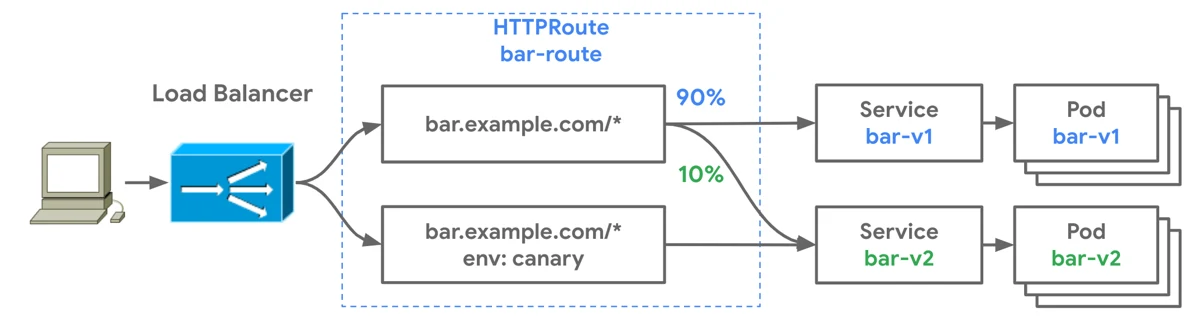
Modern routing makes the shift step routine. Weighted routing can send a small share of traffic to the new implementation, or route specific requests by header, and roll back instantly if something goes wrong6.
When a rewrite is actually right
| Situation | Usually better |
|---|---|
| System works but is slow to change | Refactor and replace slices |
| Platform is unsupported or insecure with no upgrade path | Planned migration, still in slices where possible |
| Small system with clear, stable requirements | A rewrite can be reasonable |
| Business model has changed completely | Build new alongside, retire old |
Even when replacement is justified, I push to run old and new in parallel and move traffic gradually. The goal is never a "big bang" day.
Field note: what I tell founders
Three things. First, debt is a normal cost of moving fast; the question is whether you are paying the interest knowingly. Second, the team that wants a rewrite is usually right about the pain and wrong about the cure. Third, the best signal of progress is not new architecture diagrams but faster, safer releases and fewer late-night incidents. See a fractional CTO's first 90 days, architecture decision records, the legacy estate modernisation case study and the safe change case study.
How I can help
I help leadership teams decide what debt to pay down, fund it sensibly and modernise systems without stopping the business. I am based in India, the United States and the UAE, working globally. See fractional CTO work, how I work, or analyse your challenge and bring the result to a call.
- 1The WyCash Portfolio Management System (OOPSLA 1992 experience report)Ward Cunningham · 1992
- 2Technical Debt QuadrantMartin Fowler · 2009
- 3Strangler Fig ApplicationMartin Fowler · 2004
- 4DORA's software delivery performance metricsDORA · 2026
- 5
- 6Evolving Kubernetes networking with the Gateway APIKubernetes blog · 22 Apr 2021