What happened
Reddit used its third-quarter results on 29 October to announce a shift towards a primarily logged-in experience. It said search referrals had fallen sharply, by more than a million a week in October, and that most scraping of its content happens through logged-out access12. Testing begins outside the US this quarter, with no date yet for a global rollout, and Reddit says it will keep licensing its data to AI companies13.
The reasons Reddit gives are commercial: logged-in users carry more signals for advertising, and a protected corpus is worth more in licensing talks2. The pattern matters well beyond Reddit.
Why it matters to you
For two decades, the bargain was simple: let search engines crawl you, get traffic back. AI answers break that bargain. The engine reads your content and answers the question itself, so less traffic comes back, while AI companies also crawl the same pages to train models. If your business publishes reviews, listings, prices, research, community content or documentation, you are being asked the same question as Reddit.
Standards are lagging. The IETF's AI Preferences working group is building a shared vocabulary for signals such as "allow search, not AI training", carried in robots.txt and HTTP headers, but the work is still in draft, and honouring the signals is voluntary45. In practice, control comes from your own architecture.
Design content access in tiers
Keep discovery open and structured. Gating everything trades AI scraping for invisibility. Content that brings people to you should stay crawlable, with structured data that makes it easy for AI answers to cite and link you. See structured data for AI search.
Gate the asset. The content that makes you different, such as full threads, complete datasets or detailed reviews, sits behind sign-in, with reasons for people to sign in beyond the gate itself.
Sell structured access. If AI companies want your data, an API with contracts, quotas and audit logs is better for both sides than a scraping arms race. It is also the only tier you can price.
Enforce at the edge. Put tier rules in a gateway, so public, signed-in and partner traffic follow different routes with different limits, and applications do not each reinvent bot rules. In Kubernetes, the Gateway API lets an infrastructure team own shared gateways while application teams attach their own routes, or gives a dedicated gateway to a partner API6.
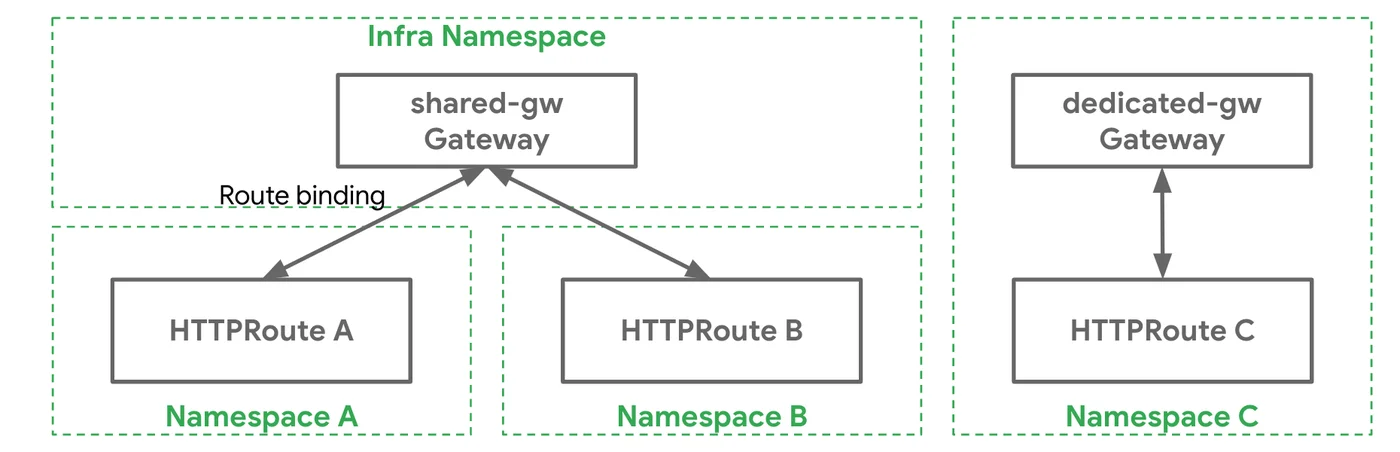
Treat your content like a product with three prices: free for discovery, an account for depth, and a contract for bulk. Then build the edge that enforces them.
What to measure first
- Classify trafficSeparate people, search crawlers, AI crawlers and unknown bots
- Trace referralsTrack search and AI-assistant referrals by page type over time
- Value contentFind which content drives sign-ups, revenue or partner interest
- Set tiersAssign each content type to open, signed in or licensed
- EnforceGateway routes, rate limits and preference signals by tier
- ReviewCheck traffic, sign-ups and licensing quarterly and adjust
Risks
- Losing discovery. Gating too much can cut the very traffic you are trying to protect. Test in one market or section first, as Reddit is doing1.
- Privacy obligations. More logged-in users means more personal data. In the EU, UK, India and elsewhere that brings consent, minimisation and rights duties; see the Europe and India pages.
- Arms race costs. Bot detection never finishes. Budget for it as an ongoing service, not a project.
- Licensing without metering. A data deal you cannot measure is hard to enforce. Build quotas and audit into the API from day one.
CTO take
Reddit is large enough to make the move loudly, but the economics apply to any business whose content has value. The answer is rarely "lock everything" or "leave everything open". It is a deliberate split between content that earns discovery, content that earns accounts and content that earns licence fees, enforced consistently at the edge. Make that design decision now, while traffic data is still telling you what each type is worth. For more on how agents and AI change who uses your systems, see when agents become the user and today's tech news brief.
How I can help
I help content and marketplace businesses design access tiers, partner APIs and edge controls for an AI-shaped web. I am based in India, the United States and the UAE, working globally. See fractional CTO work or analyse your challenge and bring the result to a call.
- 1As search traffic dries up, Reddit announces it's shifting to a logged-in experienceTechCrunch · 29 Oct 2026
- 2Reddit moves to logged-in experience as AI eats searchAxios · 29 Oct 2026
- 3Reddit will make users log in as Google's AI search cuts its trafficThe Next Web · Oct 2026
- 4AI Preferences (aipref)IETF · 2026
- 5Associating AI Usage Preferences with Content in HTTPIETF (Internet-Draft) · 2026
- 6Evolving Kubernetes networking with the Gateway APIKubernetes blog · 22 Apr 2021