- One inventory covering in-house, vendor and open-source software, including runtimes
- Exposure questions answered by query instead of manual surveys
- Patches shipped as rebuilt images, with drift from deployed state detected
- Vendor products tracked with their own bundled components and fix dates
- SBOM evidence for SEBI's framework generated from the same data
Anonymised composite. Client names, identifying details and confidential figures are withheld; public facts are cited in the references.
The situation
A mid-sized Indian stockbroker ran most of its estate on Java: an in-house order management service, a customer portal, Keycloak for identity, Jenkins for builds, and several bought products for exchange connectivity, risk and back office, each shipping with its own Java. Some ran in Kubernetes, some on virtual machines, and a few on servers that only the vendor touched.
Under SEBI's Cybersecurity and Cyber Resilience Framework, the firm already produced software bills of materials for software supporting core operations, as regulated entities are expected to, covering in-house, third-party, open-source and SaaS software3. CERT-In's guidelines set out what those SBOMs should contain and have since been extended to other kinds of bill of materials4. On paper, the firm was well placed.
Why now. Java4Shell, a flaw in the Base64 decoder of OpenJDK's runtime, was disclosed in November 2026, with reports that it can enable unauthenticated remote code execution in applications such as Jira, Jenkins and Keycloak2. Updated Java builds arrived on 17 November, with other distributions following on their own schedules1. The first question from the board was simple: where are we exposed? The SBOMs could not answer it, because they listed the libraries each application declared, not the Java runtime underneath.
What had to be true
- Runtimes in the inventory, not only application libraries: Java, Python, Node and the operating system packages beneath them.
- Vendor software included, with the components it bundles and the vendor's fix status.
- Answers by query: which systems run an affected version, who owns them, and are they internet-facing.
- One patch path: rebuild and redeploy, so what runs matches what was scanned.
- Regulatory evidence as a by-product, not a separate spreadsheet.
Architecture
The data flow, end to end
- BuildCI produces an SBOM and records the base image for every artefact
- DiscoverScans of images and hosts add runtimes the build never declared
- MapEach component is linked to where it runs, its owner and its exposure
- MatchA new advisory is matched by version and distribution in minutes
- RebuildGolden images are patched and every dependent image rebuilt and redeployed
- ProveThe inventory shows the old version gone, or an approved exception
The hard part: making the running estate match the inventory
An inventory is only as good as its link to what is actually running. Two things broke that link. First, Java arrived through many doors: base images from different teams, host packages, and vendor installers each bringing their own runtime. The fix was a small set of golden base images owned by the platform team, so patching Java meant changing one place and rebuilding everything that depended on it. Vendor products were tracked separately, with their bundled runtimes and the vendor's promised fix date recorded against them.
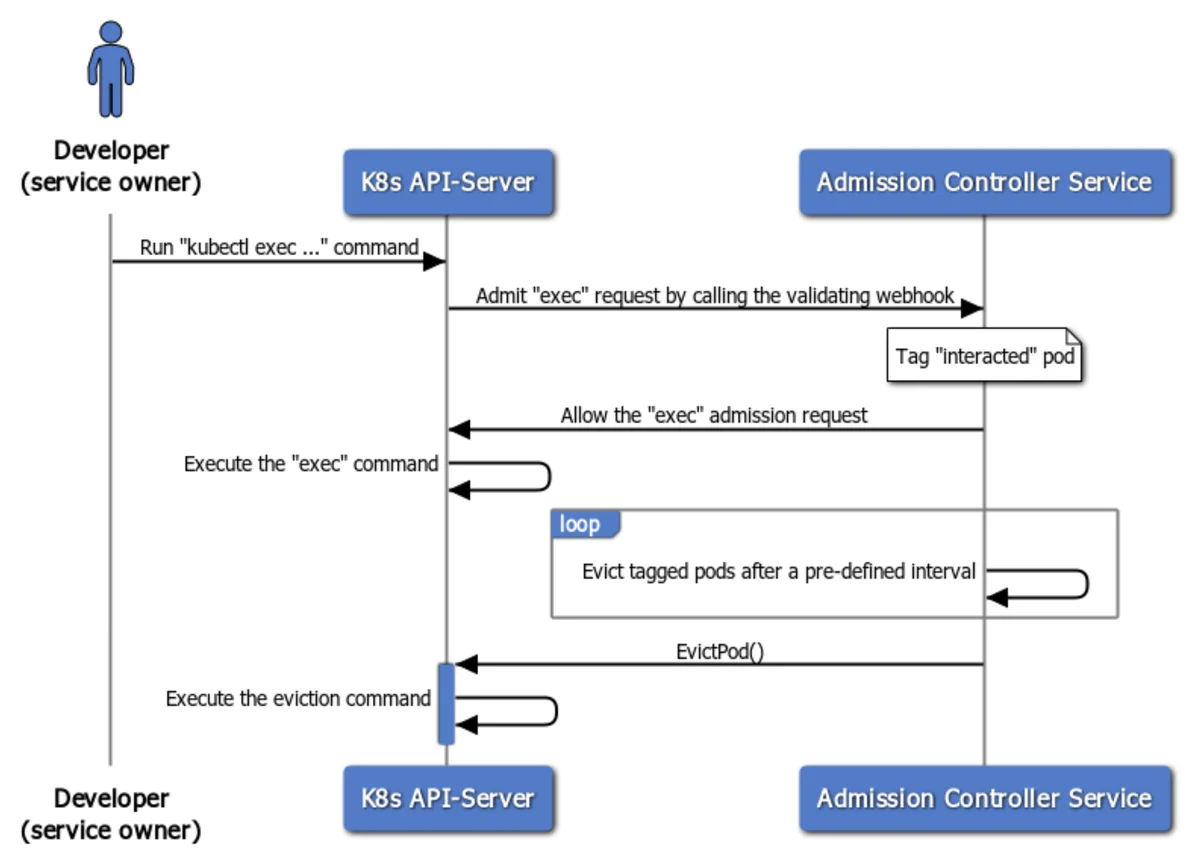
Second, people patched running systems by hand under pressure, which left containers that no longer matched their images. Kubernetes admission control can catch this: the Kubernetes blog describes a validating webhook that tags pods someone has run interactive commands in, and evicts them after a set interval so they are replaced from their declared state5. The team used the same idea, alongside a policy that only admits images built from current golden bases.
An SBOM tells you what you built. A runtime inventory tells you what you are running. For vulnerability response, only the second one matters.
Virtual machines and vendor-managed servers could not use admission control, so host discovery ran on a schedule and any runtime it found that was not in the inventory became a ticket with an owner. The approach builds on the legacy estate modernisation and vulnerability handling case studies, and on supply chain security patterns.
How it ran
- Exposure triage for Java4Shell
- Exception register
- SBOM evidence for audits
- Golden base images
- Rebuild pipeline and admission policy
- Host discovery
- Vendor runtime survey
- Fix dates in contracts
- SBOMs at procurement
- Find internet-facing Java
- Patch or isolate
- Track vendor fixes
- Image and host scans
- Component graph
- Owners and exposure
- Golden base images
- Rebuild pipeline
- Drift detection
- Advisory matching
- Vendor SBOM intake
- Regulatory evidence
Key decisions and trade-offs
| Decision | Alternative | Why |
|---|---|---|
| Scan images and hosts as well as builds | Rely on build-time SBOMs | Runtimes rarely appear in application manifests |
| A few golden base images | Each team picks its own base | One place to patch the runtime for everyone |
| Rebuild and redeploy | Patch running containers | What runs stays identical to what was scanned |
| Vendor runtimes tracked with fix dates | Treat vendor products as black boxes | Bundled Java is often the slowest part to fix |
| Time-limited exceptions with owners | Open-ended risk acceptance | Exceptions get reviewed instead of forgotten |
What I'd do again, and differently
Again: treat the inventory as a product with an owner, and make regulatory SBOMs an export from it rather than a parallel effort. Differently: ask vendors for their bundled components and patch commitments at contract renewal, not during an incident. That was the slowest part of the response, and the only part the firm could not engineer its way out of. See vendor admin access as perimeter and the tech news for 19 November.
If you run a regulated business in India, my work with Indian companies explains how I approach it, or analyse your challenge and bring the result to a call.
- 1
- 2Java4Shell Flaw (CVE-2026-114938) Enables Pre-Auth RCE in Jira, Jenkins, Keycloak and MoreThe Hacker News · Nov 2026
- 3
- 4CERT-In's technical guidelines on SBOM, QBOM and CBOM, AIBOM and HBOMAZB & Partners · 2025
- 5Using Admission Controllers to Detect Container Drift at RuntimeKubernetes blog (Saifuding Diliyaer) · 21 Dec 2021