What happened
The House Select Committee on China and the House Homeland Security Committee published a joint report on Chinese open-weight models such as DeepSeek, Qwen and Kimi. It found that cost, customisation and near-frontier performance drive their adoption, and recommended restricting them in federal agencies and contract work, a national American open-weight model initiative and a model provenance standard1. Cursor told the committees it would explore phasing out Chinese-developed open-weight models because of geopolitical risk; CNBC reports its Composer coding model was built on a Moonshot Kimi model2.
The same week, India's Sarvam began offering hosted access to Chinese models including DeepSeek alongside its own, The Next Web reports, and the report itself warns that forcing companies off these models before trusted alternatives exist would raise costs3. The recommendations are not law. They are, however, a clear signal of the questions customers and regulators will start asking.
The real problem is hidden lineage
Cursor's case shows why this is harder than it looks. A product can be marketed under its own model name while being built on someone else's base model. Fine-tunes, distillations, merged models and hosted APIs all hide where the underlying weights came from. Software teams learned this with libraries: you depend not just on what you import but on everything it imports.
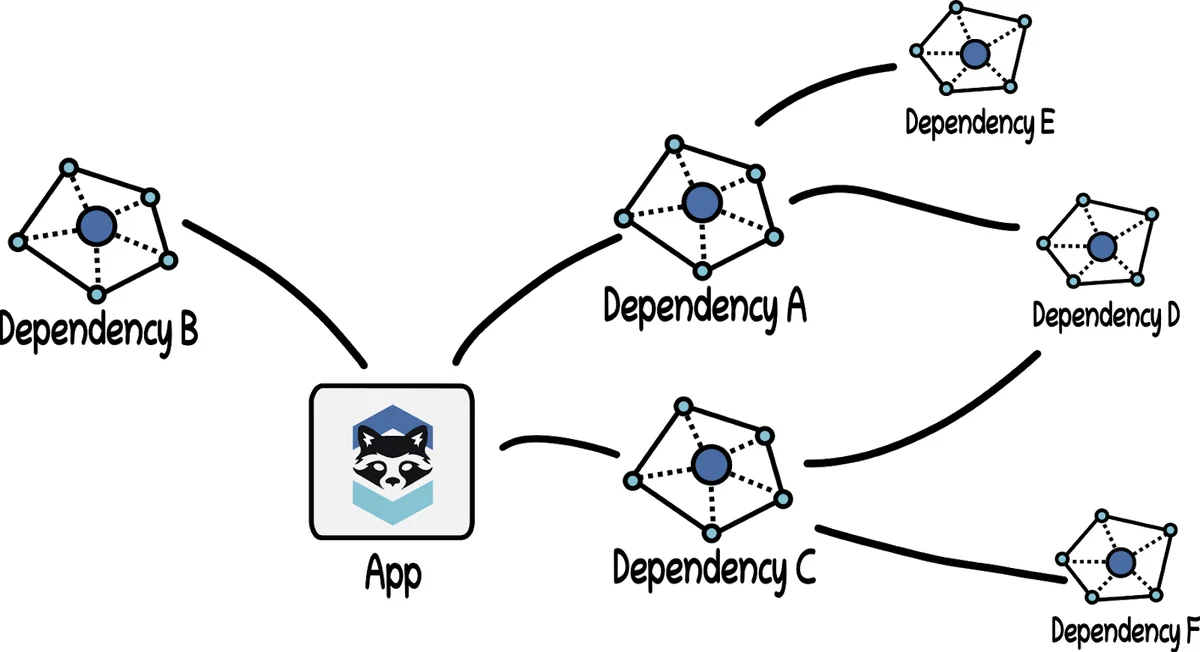
The CNCF's supply chain guidance describes exactly this structure for software, with direct and transitive dependencies each needing to be known and verified6. For models, the chain runs from base model to fine-tune to the hosted endpoint your product calls, and sometimes through a vendor that does not tell you.
What a useful model inventory records
Standards are starting to catch up. India's CERT-In expanded its bill of materials guidelines in 2025 to cover AI bills of materials alongside software, cryptographic and hardware ones4, and research such as AIBoMGen generates AI bills of materials during training, recording datasets, base model and configuration with signed attestations5. You do not need to wait for a final standard to keep a spreadsheet with the fields above.
Keep the right to switch
Provenance only helps if you can act on it. The architecture that makes switching cheap is the same one I recommend for cost and resilience: a model gateway between applications and models, evaluation sets for every important task, and at least one tested alternative for each.
- InventoryList every model and vendor model, with lineage where known
- AskRequest base model and origin from each AI vendor
- ClassifyFlag uses where origin matters to customers or rules
- PreparePut those uses behind a gateway with a tested alternative
- DecideChoose per use case, with cost and quality evidence
- RecordKeep the decision and its reasons for customers and auditors
| Situation | Sensible stance |
|---|---|
| Selling to US federal agencies or their contractors | Expect origin questions now; prepare alternatives for affected uses |
| Regulated sectors such as finance and health | Document lineage and evaluation; be ready to explain choices |
| Internal tools and experiments | Record lineage; choose on quality, cost and data handling |
| Self-hosted open weights | Origin matters less for data flow, more for licence and customer perception |
Self-hosting an open-weight model keeps your data in your environment, whatever its origin. That is a different risk from sending data to a foreign API, and it deserves a different answer.
The CTO's take
This is not only an American question. Indian, European and Gulf customers ask their own versions, about sovereignty, data residency or licensing. The companies that handle it well will be the ones that already know what is inside their products and have kept the freedom to change it. That is an engineering discipline, not a political position. Related reading: per-market AI models, model routing, self-hosting open weights and evaluation sets.
If you need a clear view of the models inside your products and a plan to keep your options open, I am a fractional CTO and AI architect based in India, the United States and the UAE, working globally. You can analyse your challenge and bring the result to a call.
- 1House Lawmakers Push US AI Models to Counter ChinaBankInfoSecurity · Nov 2026
- 2Cursor weighs phasing out Chinese AI models: House reportCNBC · 20 Nov 2026
- 3Cursor may drop Chinese AI models as India's Sarvam starts selling themThe Next Web · Nov 2026
- 4CERT-In's technical guidelines on SBOM, QBOM and CBOM, AIBOM and HBOMAZB & Partners · 2025
- 5
- 6Software Supply Chain Best PracticesCNCF TAG Security