What was reported
On 13 November the FBI issued a FLASH warning about ARTEX, an autonomous penetration testing framework that uses AI agents connected to external language models to plan and chain attack techniques1. The FBI says it is being used in real intrusions, and that some went from initial targeting to privileged access in under three hours2. Reporting says the tool was published openly, later withdrawn, and remains available through forks and a commercial edition, and that attackers favour cheap models that do not refuse requests framed as penetration testing5. Targets span sectors including energy, manufacturing and telecoms3.
Days later, the European Commission confirmed that an AI-assisted cyberattack detected in October disrupted staff systems including HR, medical reimbursement and translation services, some for more than ten days4. Press reports link that campaign to the same framework; the Commission has not confirmed it.
What actually changes
Nothing in the reporting describes a new class of vulnerability. An AI agent running a penetration testing framework uses the same techniques a human tester would. Three things change, and each shifts which defences matter.
The cost point matters most for mid-sized companies. Attacks that used to need skilled people were reserved for valuable targets. When an agent can do the reconnaissance and chaining for the price of model calls, the threshold drops, and organisations that relied on not being interesting lose that protection.
Defences that work at machine speed
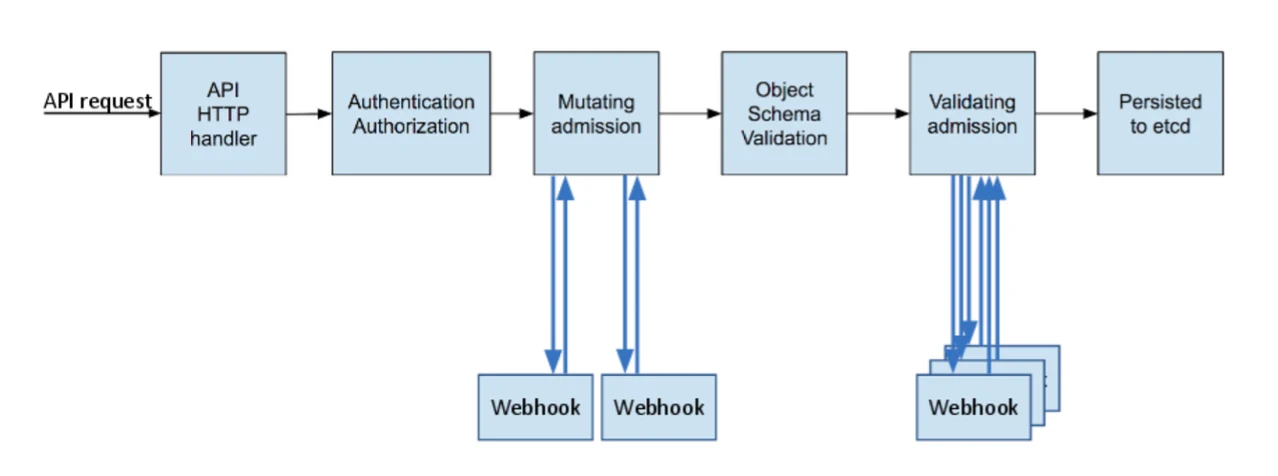
If an attacker can chain techniques in hours, a defence that depends on a person noticing an alert the next morning is too slow. The controls that hold up are the ones that sit in the path of every request and decide automatically. Kubernetes admission control is a good model: every API request passes authentication, authorisation, then mutating and validating checks before anything changes6. The same idea applies across an estate: put the decision where the action happens.
| Control | Why it matters more now |
|---|---|
| Shrink what is exposed | An agent will find every internet-facing service; fewer services means fewer chances |
| Phishing-resistant sign-in for staff and admins | Credential theft remains the cheapest first step to automate |
| Patch exposed systems in days | Exploits for published flaws are chained faster than monthly cycles allow |
| Segment management planes | A foothold should not reach identity, virtualisation or backups directly |
| Automated containment | Disable accounts and isolate hosts on high-confidence signals without waiting for a person |
| Short-lived credentials | Stolen tokens should expire before an agent finishes using them |
The test: if an attacker got a foothold at 2am on a Saturday, what stops them reaching an administrator account before Monday? If the answer is a person reading alerts, that is the gap.
Use the same tools on yourself
The uncomfortable corollary is that defenders can use these frameworks too. Running an autonomous testing tool against your own external surface, with permission and in a controlled scope, shows what an attacker's agent would find, faster than an annual penetration test. The governance matters: a defined scope, approved models, logging of every action and a kill switch. The same controls I describe for production agents in prompt injection defences and agent sandboxing apply to security agents.
- External attack surface inventory
- Admin and management plane exposure
- Sign-in methods in use
- Remove or gate exposed services
- Phishing-resistant MFA for admins
- Patch backlog on edge systems
- Automated containment playbooks
- Short-lived credentials
- Out-of-hours response cover
- Controlled autonomous testing
- Fix and retest
- Board reporting
The CTO's take
AI-assisted attacks are less a new threat than a price cut on old ones. The organisations most affected will be the ones that relied on being too small or too obscure to bother with, and the ones whose response depends on business hours. The fixes are familiar and unglamorous: expose less, authenticate strongly, patch the edge quickly and let systems contain obvious compromise automatically. This month's incidents, from vendor admin tools to the vCenter campaign, show where to start. For regulated firms, the AI cyber risk controls case study shows how this maps to supervisory expectations.
If you want a quick, honest view of how your estate would hold up against an automated attacker, I am a fractional CTO and AI architect based in India, the United States and the UAE, working globally. You can analyse your challenge and bring the result to a call.
- 1FBI warns ARTEX AI hacking tool is powering global cyberattacksBleepingComputer · Nov 2026
- 2FBI Highlights Growing Abuse of AI-Driven Pentesting Framework ARTEXInfosecurity Magazine · Nov 2026
- 3FBI warns hackers weaponizing ARTEX AI framework to automate attacks on energy, manufacturing, telecomIndustrial Cyber · Nov 2026
- 4European Commission Confirms AI-Assisted Cyberattack Disrupted ServicesSecurityWeek · Nov 2026
- 5FBI warns AI pentesting tool Artex fuels rapid cyberattacksSC Media · Nov 2026
- 6A Guide to Kubernetes Admission ControllersKubernetes blog · 21 Mar 2019