- Creditworthiness assessed for every in-scope agreement within checkout time limits
- Only permitted data reaching decisions, enforced in the feature layer
- Every automated decision recorded with inputs, rules and model version
- Customers able to request human review, with full context for reviewers
- Country differences handled by configuration, not code branches
Anonymised composite. Client names, identifying details and confidential figures are withheld; public facts are cited in the references.
The situation
A buy now, pay later provider operated in several EU countries, approving split payments at online checkouts. Its risk check was built for speed and fraud: device signals, basket details, repayment history with the provider and a fraud model. It was not designed as a creditworthiness assessment, and it used whatever data improved the model.
The revised Consumer Credit Directive changes that. Member States had to apply it from 20 November 20261, and it brings much buy now, pay later lending into scope as regulated consumer credit2. That means a creditworthiness assessment based on relevant information, limits on what personal data may be used, and, where the assessment involves automated processing, a right for the consumer to obtain human intervention, an explanation and a review13.
Why now. The rules applied from 20 November 2026, while several large markets were still finishing their national laws2. The provider needed one platform that met the directive everywhere it operated and could absorb national differences as each country's law settled4.
What had to be true
- A real creditworthiness assessment for every in-scope agreement, not a relabelled fraud score.
- Only permitted data in decisions, enforced by the platform, not by convention.
- Checkout stays fast: the decision has to fit inside the merchant's payment flow.
- Every automated decision reviewable: what was used, which rules and model, and why.
- National differences as configuration, because each country's law arrived on its own timetable.
Architecture
The data flow, end to end
- CheckoutThe merchant passes the order; the provider identifies the country and product
- FraudFraud checks run first, using fraud-specific signals kept apart from credit
- AssessCreditworthiness uses only features tagged as permitted for that country
- RecordInputs, rules, model version and outcome are written before the response
- RespondApprove, decline or ask for more information within checkout limits
- ReviewA customer can request human review, with the full decision record in front of the reviewer
The hard part: keeping prohibited data out of decisions, and out of logs
The old model had learned from everything available. Some of those signals were reasonable for fraud but inappropriate for creditworthiness, and some could stand in for categories of data the rules exclude. The fix was to tag every feature in the feature store with where it may be used: fraud only, credit permitted, or not used, per country. The decision service could only request credit features from the permitted set, so a model trained on something else simply could not be deployed for credit.
Logs were the second leak. Request headers and payloads carried details that should never reach a credit decision or a debugging tool. The team set telemetry to exclude by default and include only what was needed, masking sensitive values. OpenTelemetry's eBPF instrumentation shows the pattern, with a default exclude policy and an obfuscation value for headers that must be visible but not readable5.
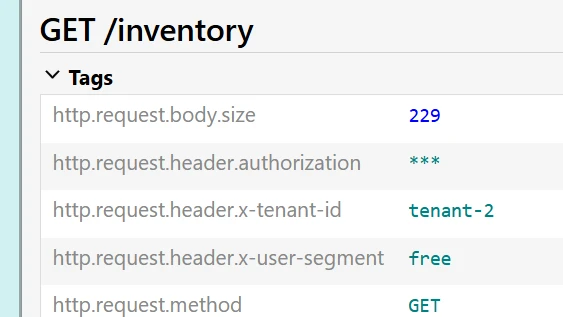
Data restrictions only work if they are enforced where features are served. A policy document cannot stop a data scientist from adding a column; a permission on the feature can.
The decision record and review workbench reused the approach from the explainable credit decisions case study, with one difference: here the record had to be written within the checkout budget, so it was designed as a single append to a fast store with asynchronous enrichment afterwards. Idempotency followed idempotent payment pipelines, so retries from merchants never produced two decisions.
How it ran
- Interpret the directive and national laws
- Permitted data list per country
- Affordability policy
- Feature permissions
- Decision records and workbench
- Country configuration
- Review team and procedures
- Customer explanations
- Monitoring and complaints
- Split fraud and credit
- Tag every feature
- Remove disallowed data
- Affordability rules
- Retrain on permitted data
- Latency budget
- Decision records
- Review workbench
- Explanations
- Country configuration
- Track national laws
- Monitoring
Key decisions and trade-offs
| Decision | Alternative | Why |
|---|---|---|
| Separate fraud and credit steps | One combined risk score | Different purposes justify different data |
| Permissions on features | Data policy documents | Enforced at the point of use |
| Retrain on permitted data only | Keep the old model and filter inputs | A model can rely on proxies for removed data |
| Write the record before responding | Log asynchronously | No decision exists without its evidence |
| Countries as configuration | Code branches per market | National laws arrived at different times |
| Telemetry excludes by default | Capture everything, redact later | Sensitive data never lands in tools |
What I'd do again, and differently
Again: treat the permitted data list as a product owned jointly by credit risk and engineering, enforced in the feature store. Differently: involve the review team before building the workbench. They knew which context they needed to decide quickly and fairly, and the first version showed too much detail in the wrong order. See structured outputs for how explanations were generated consistently and the EU AI Act roadmap for the high-risk credit scoring rules that come later.
If you run a regulated business in Europe, my work with European companies explains how I approach it, or analyse your challenge and bring the result to a call.
- 1
- 2Europe's BNPL rules apply from Friday. Several big markets are still finishing the law.FinTech Weekly · Nov 2026
- 3
- 4
- 5OBI HTTP header enrichmentOpenTelemetry blog · 2026