What happened
Apple and Alibaba said on 31 October that Alibaba's Qwen will power the China edition of Apple Intelligence, covering features such as Writing Tools and Visual Intelligence, with a developer beta from 4 November and a public release planned for December12. The rebuilt Siri is not part of this release, and eligibility depends on the device being bought in China or the device and account region being set to China1. Alibaba says it will not use user requests or responses to train its models2.
The regulatory backdrop explains the shape of the deal. China's Interim Measures for generative AI services require qualifying public-facing services to go through a filing process with the Cyberspace Administration of China3, which publishes lists of filed services in batches4, and a 2026 list of on-device generative AI filings reportedly named Apple Intelligence5.
Why this matters beyond Apple
Most AI products are built as if there will be one model provider, one region and one set of rules. That assumption is breaking. China is the clearest case, but data residency rules in the GCC, India and elsewhere, sector rules in financial services and health, and customers' own procurement policies all push towards different models or deployments per market. Apple has the resources to build a separate edition. Most companies need an architecture that makes it routine.
Five design rules
1. Call tasks, not vendors. Application code should ask for "summarise", "rewrite" or "describe image", not for a specific provider's API. That single change is what makes a per-market model a configuration choice rather than a rewrite. See model routing.
2. Route on market, task and data class. The router decides which model may serve a request based on where the user is, what the task needs and how sensitive the data is. Some markets get the global model, some a local one, some a self-hosted one; see running a large open model yourself.
3. Evaluate per market and language. A model that tests well in English may behave differently in Simplified Chinese, Arabic or Bahasa, and local safety expectations differ. Keep an evaluation set per market and run it on every model change; see evaluation sets that predict production.
4. Keep data paths and evidence in the market. Prompts, outputs and logs often carry personal data. If the model runs in-country but your logs ship elsewhere, you have moved the problem, not solved it. Separate telemetry pipelines per market or tenant give strong isolation, at the cost of running more of them6.
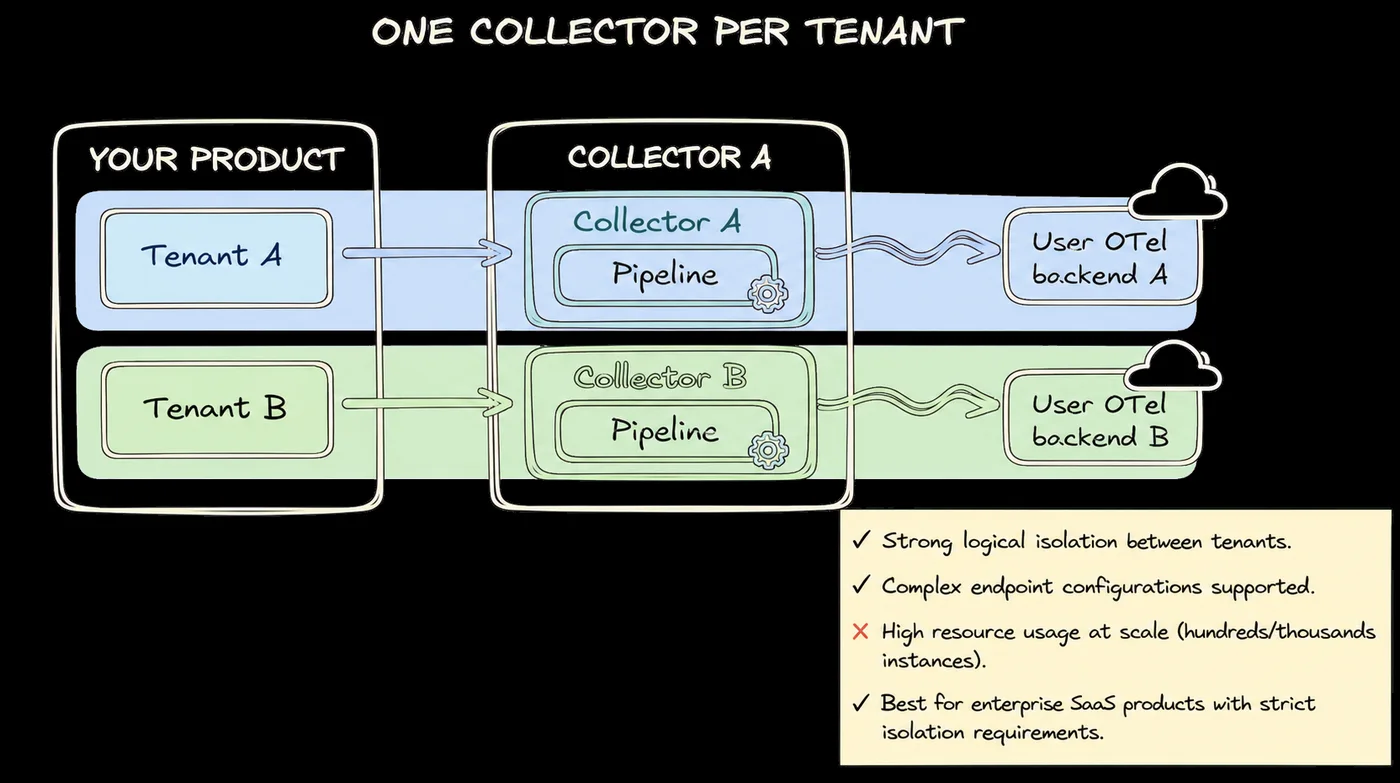
5. Ship features by market, not all at once. Apple is launching some features in China and holding others back1. Feature flags per market let you launch what the local model and rules support, and add the rest when they do.
Build as if every market will eventually want its own model, because the ones that matter most to you probably will.
A plan for adding a market
- RulesConfirm filing, residency and sector rules for AI in the market
- ModelChoose a permitted model and deployment: global, local or self-hosted
- EvaluateBuild a local evaluation set in the market's languages and run it
- LocaliseAdapt prompts, safety rules and disclosures
- ContainKeep prompts, outputs and logs within the market boundary
- LaunchEnable the features the market supports; flag the rest
CTO take
Apple's deal is a large-scale proof that "one global model" is not a viable plan for products sold everywhere. The good news is that the architecture to handle it is not exotic: a task-level AI interface, a router, per-market evaluations and data boundaries. Teams that build those now can enter a new market by configuring a model and running an evaluation; teams that hard-code a single provider will face a rewrite each time. For examples by region, see a sovereign LLM platform in Europe, privacy-first AI triage in Kenya and where I work.
How I can help
I help teams design AI platforms that can run different models per market without forking the product. I am based in India, the United States and the UAE, working globally. See AI architecture or analyse your challenge and bring the result to a call.
- 1Apple confirms its AI features reach China in December, with QwenThe Next Web · Oct 2026
- 2
- 3Interim Measures for the Management of Generative AI ServicesComparativeAI · 2026
- 4Cyberspace Administration's domestic generative AI services filing listDigital Policy Alert · 2026
- 5China Publishes On-Device GenAI Filing List, Names AppleThe Leveraged Years · 2026
- 6OTel-Native by Design: Building Products That Export to Any Observability StackOpenTelemetry blog · 8 Oct 2026