- Every AI agent inventoried with an owner, purpose and access
- Agents built on one framework with shared controls
- Agent tool access scoped, logged and revocable
- Payment and access changes protected against impersonation
- AI risk mapped to important business services and impact tolerances
Anonymised composite. Client names, identifying details and confidential figures are withheld; public facts are cited in the references.
The situation
A UK payments and e-money firm had adopted AI quickly and unevenly. Customer support used an agent that could look up transactions and raise refunds. Fraud operations used one that summarised alerts and suggested account restrictions. Engineering used coding agents with access to repositories and deployment pipelines. Each was built by a different team, on a different framework, with its own service accounts and its own idea of logging.
At the same time, the attacks the firm saw were changing: more convincing phishing, impersonation of executives in calls and messages asking for urgent payment changes, and faster exploitation of newly published flaws. The firm already worked to the FCA's operational resilience rules, which require important business services to be identified and kept within impact tolerances3.
Why now. In November 2026 the Bank of England, PRA and FCA published a consultation on cyber risk and resilience management, CP17/26 and GC26/9, clarifying how firms should meet existing requirements, with responses due by 26 February 20272. Alongside it they published effective practices on AI-related cyber risk, which treat AI as creating new risks, amplifying existing ones and helping defenders, and which include reducing the attack surface against AI-enabled attacks1. The board wanted to know how the firm compared, before a supervisor asked.
What had to be true
- Every agent known: owner, purpose, model, tools and data it can reach.
- One way to build agents, so controls are written once.
- Agent actions as accountable as staff actions: identity, least privilege, logs and a way to stop them.
- Defences that assume attackers use AI, especially for payments and access changes.
- Everything tied to important business services, so AI risk fits the resilience framework the firm already runs.
Architecture
The data flow, end to end
- RequestA user or event triggers an agent through the shared framework
- IdentifyThe agent runs with its own short-lived identity, not a shared account
- Call toolsEvery tool call goes through the gateway and is checked against policy
- ApproveMoney movement and access changes need a person, verified out of band
- RecordPrompts, tool calls and outcomes are captured as telemetry
- DetectSecurity monitoring flags unusual agent behaviour alongside human activity
The hard part: controlling agents the firm did not build the same way
The three agent estates could not be governed one by one; there was no shared place to put a control. The answer was to move them onto one framework over time, so identity, tool access, logging and a kill switch were properties of the platform rather than of each team's code. OpenTelemetry's work on agent observability draws the same distinction between agent applications and the frameworks they are built on, and argues for standard telemetry at the framework level so every application inherits it5.
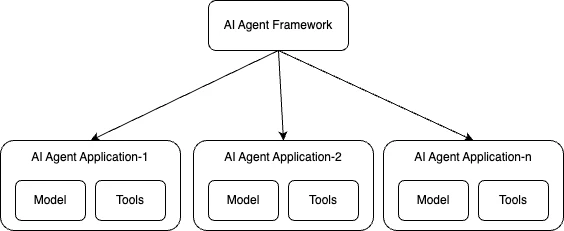
The fastest risk reduction came before any migration: an inventory, then removing tools agents did not need. Some had write access they had never used.
The second half of the hard part was outside the firm. Impersonation attacks target the same processes agents touch: refunds, payee changes, admin access. Those changes now need a person to approve them through a separate, verified channel, never on the strength of a message, call or agent request alone. The pattern follows the deepfake-resistant onboarding and staff access hardening case studies, and the agent platform builds on the enterprise MCP agent platform.
How it ran
- Map AI to important business services
- Compare against effective practices
- Consultation response
- Agent inventory
- Tool gateway and identities
- Telemetry and monitoring
- Approval steps for payments and access
- Staff training on impersonation
- Agent incident playbooks
- Find every agent
- Owners and access
- Remove unused tools
- Tool gateway
- Per-agent identity
- Out-of-band approvals
- Shared framework
- Telemetry
- Kill switches
- Service mapping
- Scenario tests
- Board and regulator view
Key decisions and trade-offs
| Decision | Alternative | Why |
|---|---|---|
| One agent framework for the firm | Each team chooses its own | Controls built once and applied everywhere |
| All tool calls through a gateway | Agents call APIs directly | One place to scope, log and revoke access |
| Per-agent, short-lived identities | Shared service accounts | Actions traceable to an agent; stolen tokens expire |
| Human approval for money and access changes | Trust agent or message alone | Impersonation and injection target exactly these steps |
| Map to existing resilience framework | A separate AI risk register | AI risk sits where the board already looks |
What I'd do again, and differently
Again: start with the inventory and the tool gateway, which reduced risk before any larger change, and treat the regulators' effective practices as a checklist rather than waiting for final guidance. Differently: involve the contact centre and finance teams from day one. The impersonation attempts reached them first, and their ideas made the approval steps practical. The NCSC's Cyber Assessment Framework, which the consultation aligns with4, was a useful common language between engineering and risk. See vendor admin access as perimeter and the tech news for 20 November.
If you run a regulated UK business, my work with UK companies explains how I approach it, or analyse your challenge and bring the result to a call.
- 1Effective practices: Cyber risk and resilience management relating to artificial intelligence (AI)Bank of England · Nov 2026
- 2CP17/26 and GC26/9: Cyber risk and resilience managementBank of England · Nov 2026
- 3PS21/3: Building operational resilienceFinancial Conduct Authority · Mar 2021
- 4Cyber Assessment FrameworkNational Cyber Security Centre
- 5AI Agent Observability: Evolving Standards and Best PracticesOpenTelemetry blog (Guangya Liu, Sujay Solomon) · 2025