- Onboarding sessions bound to genuine devices and cameras, not injected video
- Several independent signals combined, so no single check decides
- Higher-risk applications routed to trained reviewers with clear guidance
- Biometric and identity data processed in the Kingdom with tight retention
- Fraud patterns fed back into rules and models continuously
Anonymised composite. Client names, identifying details and confidential figures are withheld; public facts are cited in the references.
The situation
A digital bank in Saudi Arabia opened accounts entirely in its app: the customer photographed their ID, recorded a short selfie video, and a vendor's model compared the two. It worked well for genuine customers. Fraud teams were seeing more attempts that looked like synthetic faces and replayed or injected video, and the existing check had one weak point: if the video was convincing, the account opened.
Why now. On 15 October 2026, SDAIA and the Communications, Space and Technology Commission launched the "It's AI" campaign on the risks of deepfakes, including fraud and identity theft, as part of Saudi Arabia's Year of AI1. The CST's guidance lists countermeasures including labelling AI-generated content, detection tools and international provenance standards such as C2PA2. For a bank whose front door is a camera, the message was clear: assume faces and voices can be faked.
What had to be true
- No single check decides: several independent signals combine into a risk score.
- Trust the capture, not just the content: prove video came from a genuine camera on a genuine device.
- Genuine customers barely notice; friction rises only with risk.
- Personal and biometric data handled under the PDPL, processed in the Kingdom and kept briefly34.
- People in the loop for the hard cases, with good tools and guidance.
Architecture
The data flow, end to end
- AttestThe app proves it runs unmodified on a genuine device
- CaptureID and selfie video captured with camera integrity checks
- VerifyLiveness, face match and document checks run in parallel
- ScoreSignals combined with device, network and behavioural context
- RouteLow risk opens; medium steps up; high goes to a reviewer
- LearnConfirmed fraud updates rules and thresholds
The hard part: attacks that never touch the camera
The most dangerous attacks skip the camera altogether, feeding generated or replayed video into a tampered app or emulator. Better face models do not help if the input is fake. The answer was to raise the attacker's cost at the capture step: device and app attestation, plus camera integrity checks, so injected video fails before any face comparison runs. The same reasoning appears in security design elsewhere: in the Model Context Protocol's analysis of client impersonation, adding attestation moves an attack from cheap to costly6.
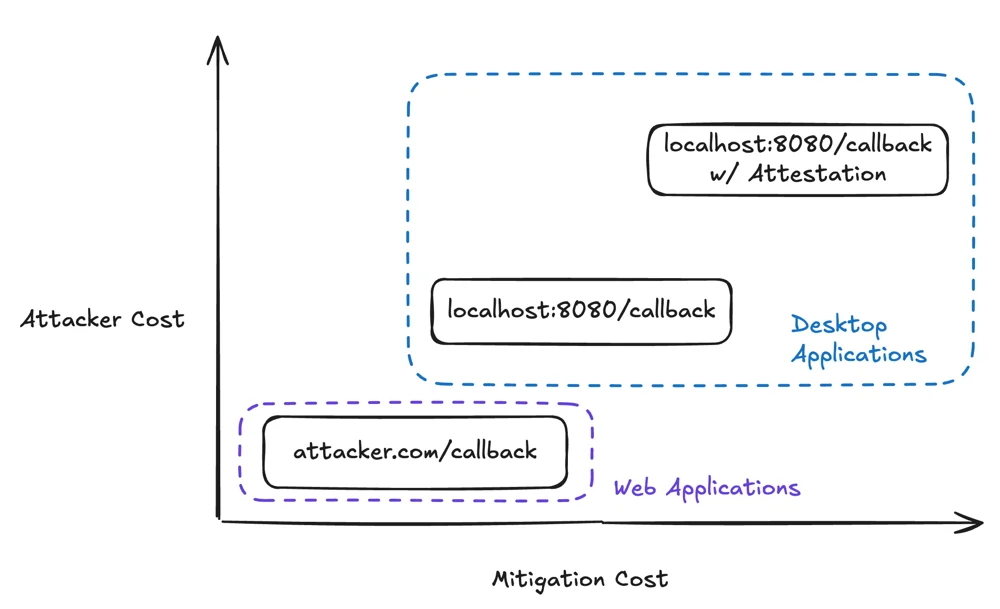
Do not try to out-detect every deepfake. Make faking the capture expensive, and combine enough independent signals that no single fake is enough.
Where documents or media carried content credentials, the platform recorded them as one more signal; provenance standards such as C2PA are designed to show how content was created and edited5. Their absence was never treated as proof of fraud. Related reading: defender-first AI and patch cycles and detecting fraud rings with a knowledge graph.
How it ran
- Attack scenarios
- Risk thresholds
- Reviewer guidance
- Attestation and capture
- Risk scoring service
- Telemetry and feedback
- PDPL and retention
- In-Kingdom processing
- Vendor testing evidence
- Red-team the flow
- Injected and replayed video
- Document fraud
- Device attestation
- Camera integrity
- Guided capture
- Risk scoring
- Step-up flows
- Reviewer tools
- Fraud feedback loop
- Retention tuning
- Quarterly red-teaming
Key decisions and trade-offs
| Decision | Alternative | Why |
|---|---|---|
| Secure the capture step first | Buy a better deepfake detector | Injected video bypasses any detector downstream |
| Combine independent signals | One strong biometric check | An attacker must defeat several things at once |
| Risk-based step-up | Extra checks for everyone | Genuine customers keep a fast journey |
| Human review for high risk | Automatic rejection | Fewer false rejections, better fraud learning |
| In-Kingdom processing, short retention | Vendor processing abroad | Simpler under PDPL transfer rules and less to lose |
What I'd do again, and differently
Again: red-team the onboarding flow before buying anything; it showed the weak point was capture, not matching. Differently: build reviewer tooling earlier. The quality of human decisions on hard cases depended more on the tools than on the guidance. See also Saudi PDPL and cross-border AI.
If you run digital onboarding in Saudi Arabia or the Gulf, my work with Saudi companies explains how I approach it, or analyse your challenge and bring the result to a call.
- 1SDAIA and CST launch 'It's AI' campaign to raise awareness of fake clips and deepfake risksSaudi Press Agency · 15 Oct 2026
- 2It's AI: deepfake awarenessCommunications, Space and Technology Commission
- 3
- 4A close-up on Saudi Arabia's personal data transfer regulationsAl Tamimi & Company
- 5C2PA specificationsCoalition for Content Provenance and Authenticity
- 6Evolving OAuth client registration in the Model Context ProtocolModel Context Protocol blog (Paul Carleton) · 22 Aug 2025