- Every AI use, built or bought, recorded with owner, purpose and risk tier
- Controls proportionate to tier, so low-risk uses are not slowed down
- Vendor AI assessed on evidence rather than self-attestation where risk warrants
- Release gates that require evaluations and monitoring before material AI goes live
- Board reporting generated from live data, not assembled by hand
Anonymised composite. Client names, identifying details and confidential figures are withheld; public facts are cited in the references.
The situation
A Singapore-based wealth manager served private and affluent clients across Asia. AI had arrived from every direction: a suitability scoring model built in-house, a vendor's generative AI assistant for relationship managers, a document tool that drafted client letters, transaction monitoring with machine learning inside, and an operations pilot using AI agents to reconcile statements. Risk kept a short spreadsheet of "AI models". Nobody believed it was complete.
Why now. The Monetary Authority of Singapore (MAS) issued its final Guidelines on Artificial Intelligence Risk Management on 7 October 202613. Published summaries describe guidelines that cover all forms of AI, including generative AI and agents, on a risk-proportionate basis; that put boards and senior management in charge of AI risk appetite and oversight; and that keep the institution accountable for AI bought from vendors23. Commentary reports transition periods into 2027 and 20283. The authoritative text sits with MAS4. The board wanted to know what the firm actually used, how risky each use was, and how it would know when something went wrong.
What had to be true
- A complete, living inventory of AI, built and bought, including features inside vendor products.
- Risk tiers that change the controls: light for low-risk uses, rigorous for client-impacting ones.
- Vendor AI held to the same bar, with evidence proportionate to risk.
- Gates in the lifecycle: material AI cannot go live without evaluations and monitoring.
- Board reporting from live data, not quarterly heroics.
Architecture
The data flow, end to end
- DiscoverGateway traffic, procurement and code scans reveal AI uses
- RegisterEach use is recorded with owner, purpose, data and affected clients
- TierRules assign a risk tier from impact, autonomy and data sensitivity
- ControlThe tier sets required evaluations, approvals, monitoring and vendor evidence
- MonitorTelemetry tracks quality, drift, incidents and cost against thresholds
- ReportDashboards roll up by tier and business line for management and the board
The hard part: finding the AI you did not build
Most of the firm's AI was inside products it had bought. Vendors had switched on generative features in CRM, document and communications tools, often by default. Interviews missed them. The team used three nets: every generative AI call from internal systems went through an LLM gateway, which logged the application and model; procurement and renewals now asked vendors to declare AI features and their data use; and a periodic scan looked for AI SDKs and API keys in code and configuration. Each find created a draft inventory entry for an owner to complete.
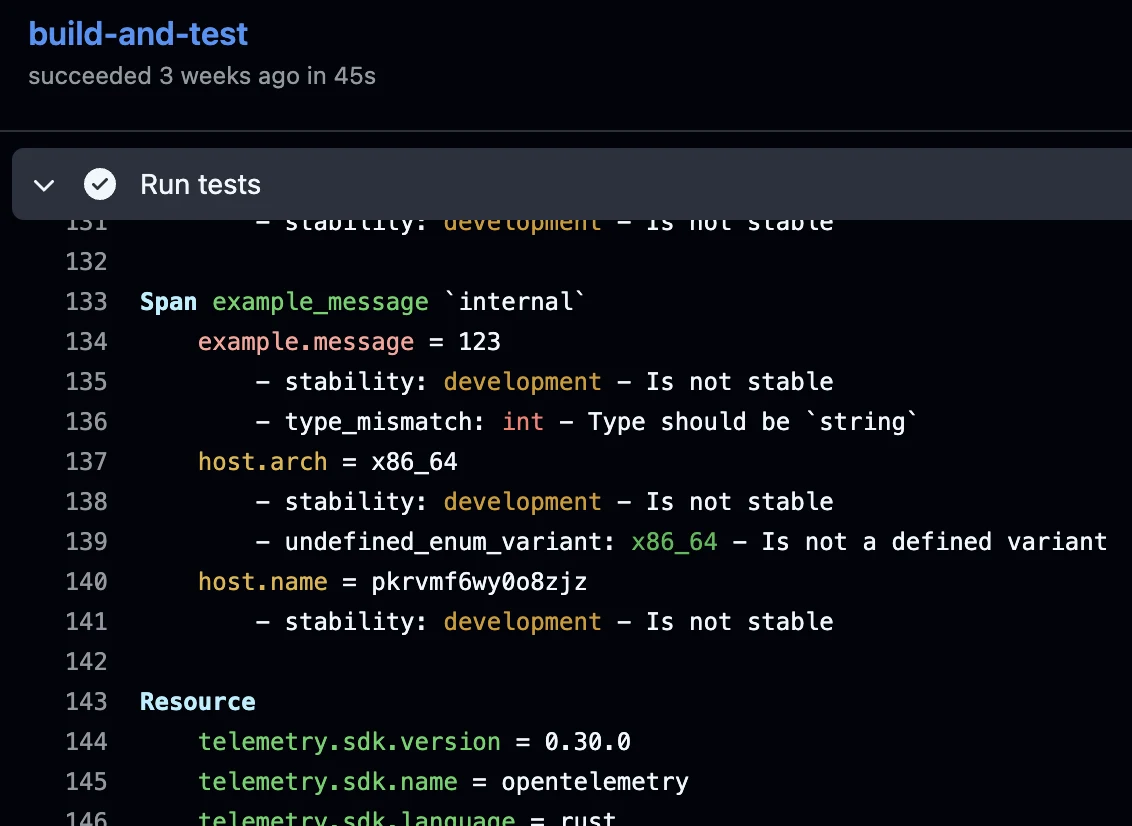
Monitoring had a consistency problem. Each tool reported AI activity differently, so dashboards were stitched together by hand. The team adopted the OpenTelemetry generative AI conventions as the firm's telemetry contract and checked conformance in CI, so a service that emitted the wrong attributes failed its build rather than quietly breaking reports. OpenTelemetry Weaver provides exactly that kind of live check against a registry of conventions5.
Agents needed their own treatment. The reconciliation pilot was low risk in impact but high in autonomy, so its tier was raised: every action logged, narrow permissions and a human approval step for anything that changed client records. See when agents become the user and evaluating AI agents.
An AI inventory kept by survey is out of date the day it is finished. Wire discovery into the gateway, procurement and the codebase, and let people complete what the systems find.
How it ran
- Risk appetite
- Tier rules
- Board reporting
- LLM gateway
- Inventory and registry
- Telemetry and CI checks
- Use owners
- Vendor declarations
- Vendor evidence
- LLM gateway
- Vendor declarations
- Code scans
- Risk appetite
- Tier rules
- Owners named
- Release gates
- Evaluations
- Vendor assessments
- Telemetry contract
- CI conformance
- Live board view
Key decisions and trade-offs
| Decision | Alternative | Why |
|---|---|---|
| Discover through systems | Annual surveys | Inventory stays current as tools change |
| Tier by impact, autonomy and data | One control set for all AI | Proportionate effort, as the guidelines intend |
| All generative AI through one gateway | Direct calls from each app | Visibility, policy and cost in one place |
| Telemetry contract checked in CI | Dashboards fixed by hand | Reliable evidence without manual effort |
| Evidence from vendors by tier | Accept self-attestation everywhere | Accountability stays with the firm |
What I'd do again, and differently
Again: put the gateway in early. It quickly found AI uses the survey had missed. Differently: involve procurement from the start. Vendor features switched on at renewal were the largest source of new entries. Related: ISO 42001 and the NIST AI RMF, LLM observability with OpenTelemetry, an agent-ready marketplace in Southeast Asia and the Singapore page.
If you are putting MAS's AI guidelines into practice, see my AI architecture work, or analyse your challenge and bring the result to a call.
- 1October 2026 Global Regulatory Brief: AI risk management, tokenized securities and cryptoasset regulationBloomberg Professional · Oct 2026
- 2
- 3MAS Finalises AI Risk Guidelines for Financial FirmsLeapRate · Oct 2026
- 4
- 5Observability by Design: Unlocking Consistency with OpenTelemetry WeaverOpenTelemetry blog · 2 Jul 2025