- A single consent service covering both sharing and receiving data
- Provider APIs built on a canonical model that can map to the SFC standards as they are published
- Security aligned with a recognised financial-grade API profile
- Availability and latency measured per endpoint, ready for regulator indicators
- Received data usable by credit and product teams with purpose recorded
Anonymised composite. Client names, identifying details and confidential figures are withheld; public facts are cited in the references.
The situation
A mid-sized Colombian bank offered current accounts, cards and small business loans. It had taken part in the earlier, voluntary open finance scheme in a limited way: a few partner integrations, each built separately, with its own consent screens and its own security setup. Customer data lived in a core banking system, a card platform and a lending system, each with a different idea of what a "customer" was.
Why now. Decree 368 of 2026 made open finance mandatory for institutions supervised by the Financial Superintendence of Colombia (SFC), replacing the voluntary framework1. Supervised entities must act as both data providers and data receivers, and data can only flow with the customer's prior, express and informed consent2. The common technical standards are left to the SFC, and commentary on the decree sets out a deadline in October 2026 for the SFC to publish its schedule for them, with a period for institutions to comply after each standard is issued3. The bank had to start building before the details were final.
What had to be true
- One consent model for every data flow, out and in, that customers can see and revoke.
- Standards-ready APIs: a canonical internal model that can be mapped to the SFC standards as they arrive.
- Financial-grade security for every third party, with no bespoke partner setups.
- Measurable reliability: availability and latency per endpoint, because the regulator will publish indicators.
- Useful received data: data from other institutions available to credit and product teams, with purpose recorded.
Architecture
The data flow, end to end
- RequestA receiver asks for access to specific data for a stated purpose
- ConsentThe customer authenticates with the bank and approves scope and duration
- TokenA sender-constrained token is issued for that consent only
- ServeThe gateway checks token and consent; data APIs answer from the canonical model
- MeasureEach call is traced and counted against availability and latency targets
- RevokeThe customer can withdraw consent; tokens stop working at once
The hard part: building to standards that do not exist yet
The decree sets the framework, but the technical standards come later13. Waiting meant missing the window; building to a guess meant rework. The team separated what was certain from what was not.
Security was the most certain. Open finance schemes around the world converge on financial-grade API profiles, so the authorisation server was built to the OpenID Foundation's FAPI 2.0 Security Profile, with sender-constrained tokens and strong client authentication4. Whatever the local profile adds, most of that work carries over.
Data formats were the least certain. Instead of exposing internal systems directly, the team built a canonical model of customers, accounts, cards and loans, fed by change data capture from each source system. The public API shapes became a thin mapping layer on top. When the SFC publishes a standard, the change lands in the mapping, not in three core systems. More on that pattern in change data capture and event streams and data contracts.
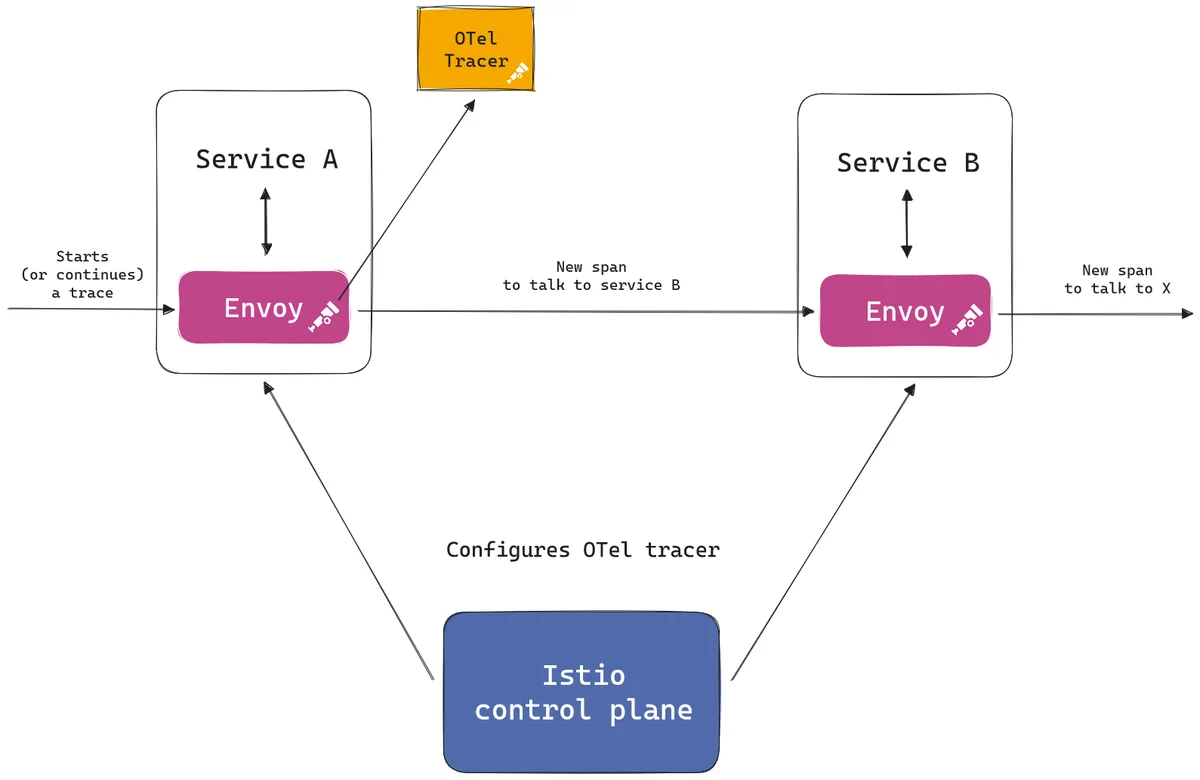
Reliability had to be measurable from day one, because the SFC must publish indicators on the system2. The gateway emits a trace for every call, so availability and latency can be reported per endpoint and per participant, and a slow downstream system shows up in the trace rather than in a complaint5.
When the rules are still being written, build the parts every scheme shares, consent, security and measurement, and keep the parts that will change behind a thin mapping layer.
How it ran
- Decree and SFC tracking
- Consent wording and purposes
- Participant agreements
- Canonical model and CDC
- Gateway and authorisation server
- Service-level reporting
- Receiver use cases
- Customer dashboard
- Use of received data
- Consent service
- Authorisation server
- Gateway with tracing
- Canonical model
- Change data capture
- Account and card APIs
- Data client
- Purpose-tagged store
- First credit use case
- Map SFC standards as issued
- Indicator reporting
- Participant onboarding
Key decisions and trade-offs
| Decision | Alternative | Why |
|---|---|---|
| Build to FAPI 2.0 now | Wait for the local profile | Security work carries over; waiting costs months |
| Canonical model behind thin mappings | Expose source systems directly | Standards changes land in one place |
| Change data capture | Nightly batch extracts | Shared data must be current, and batch hides failures |
| One consent service for in and out | Separate provider and receiver consent | One place for customers to see and revoke |
| Trace every call at the gateway | Sample or rely on logs | Regulator indicators need complete, per-endpoint data |
What I'd do again, and differently
Again: treat the receiver side as a product, not a compliance task. Data from other institutions is what makes open finance worth the cost, as the Brazilian lender found when it used consented data in credit decisions. Differently: start participant onboarding earlier. Technical integration was faster than agreeing testing and support arrangements with other institutions. Related: idempotent financial pipelines and where I work.
If you are preparing for open finance in Colombia or elsewhere in Latin America, see my fractional CTO work, or analyse your challenge and bring the result to a call.
- 1Decreto 368 de 2026Función Pública (Colombia) · 2026
- 2Finanzas abiertas obligatorias impulsarán el desarrollo del sistema y la inclusión financiera en el paísSuperintendencia Financiera de Colombia · Apr 2026
- 3Open Finance Colombia 2026: The Mandatory Path Toward Financial InclusionFacephi Observatory · 2026
- 4FAPI 2.0 Security ProfileOpenID Foundation · 2025
- 5Observability at the Edge: New OTel features in Envoy and IstioOpenTelemetry blog · 7 Jun 2024