- Every management interface inventoried, with an owner and a patch route
- Administration possible only from dedicated, hardened workstations on an isolated network
- Standing admin rights replaced by time-limited, approved access
- Management-plane logs shipped off-device to storage attackers cannot edit
- Incident drills run against realistic management-plane scenarios
Anonymised composite. Client names, identifying details and confidential figures are withheld; public facts are cited in the references.
The situation
A regional utility in the United States supplied water and electricity to several counties. Its operational technology (OT) team had done solid work separating control systems from the corporate network. The IT side was different. Firewall and VPN consoles, an SD-WAN controller, the hypervisor manager, endpoint management, the IT service platform and the GIS server were all administered from ordinary laptops on the corporate network, several with web consoles reachable from the internet "for vendor support". Many admins had standing domain-wide rights.
Why now. In late October 2026, Lumen's Black Lotus Labs described Volt Typhoon's Silent Train framework: short-lived relay networks used in several zero-day campaigns against centralised management platforms, with victims including energy, water and transport organisations12. The same week, Help Net Security reported a China-nexus group using a VMware ESX logging flaw as a zero-day to hide its activity4. CISA and partners had already warned in 2024 that Volt Typhoon seeks persistent access to US critical infrastructure, living off the land and abusing valid accounts3. The utility's board asked a simple question: if someone took over our management tools, would we know?
What had to be true
- No management interface on the internet, and every one inventoried with an owner.
- Administration only from dedicated, hardened workstations on an isolated network.
- No standing admin rights: access granted for a task, approved and time-limited.
- Logs that survive a compromise: shipped off the device, to storage the attacker cannot edit.
- A practised response for "a management tool is compromised", including OT impact.
Architecture
The data flow, end to end
- RequestAn admin requests access to a specific console for a ticketed task
- ApproveA second person approves; access is granted for hours, not months
- ConnectFrom a privileged workstation, through the isolated admin network, with a hardware key
- ActChanges are made, recorded and, where possible, applied through code
- ShipDevice and console logs stream off-device over mTLS to immutable storage
- ExpireAccess ends automatically; detections compare actions with the ticket
The hard part: telemetry an attacker cannot erase
Attackers who reach a management tool tend to clean up after themselves, and the ESX case shows they will use logging weaknesses to hide4. Logs that stay on the device prove little. The team made off-device telemetry the rule: firewalls, VPN concentrators, hypervisors and consoles send logs to OpenTelemetry Collectors at each site, which forward them over mutually authenticated TLS to a central collector behind a gateway that terminates mTLS5. From there, data lands in write-once storage with its own separate admin path.
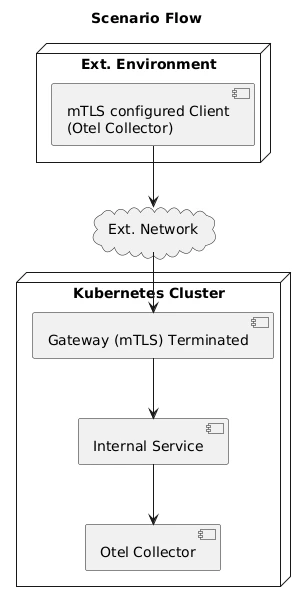
Two details mattered. First, the logging pipeline had its own credentials and admins, so taking over the firewall console did not also give control of the logs about it. Second, detections focused on behaviour CISA describes for this actor, such as valid accounts used at odd times, new admin accounts and configuration exports, rather than malware signatures3.
If the people who administer a system also administer its logs, you do not have evidence. You have a diary the attacker can edit.
How it ran
- Management plane inventory
- Detections and drills
- Vendor access rules
- Admin network
- Privileged workstations
- Patch routes per device
- Dependencies on IT tools
- Isolation checks
- Joint incident playbook
- Inventory consoles
- Remove internet exposure
- Patch edge devices
- Admin network
- Privileged workstations
- Hardware keys
- Off-device logs
- Immutable storage
- Behaviour detections
- Just-in-time access
- Tabletop drills
- Vendor session brokering
Key decisions and trade-offs
| Decision | Alternative | Why |
|---|---|---|
| Dedicated admin workstations | Admin from everyday laptops | Phishing and browsing never touch admin sessions |
| Isolated admin network | Firewall rules on the corporate network | One path to watch and defend |
| Just-in-time access | Standing domain admin rights | Stolen accounts are useless most of the time |
| Separate admins for logging | Same team runs systems and logs | Evidence survives a console takeover |
| Brokered vendor sessions | Internet-facing consoles for vendors | Support without permanent exposure |
What I'd do again, and differently
Again: start with the inventory. Several consoles nobody owned turned up, including two still facing the internet. Differently: involve the main vendors in week one. Their support processes, not our technology, were the slowest part to change. For the patching side, see defender-first AI models and vulnerability management, this week's tech news brief, securing a legacy PHP estate and OpenTelemetry in practice.
If you run critical infrastructure in the United States or elsewhere, see the US page, or analyse your challenge and bring the result to a call.
- 1Silent Train: uncovering Volt Typhoon's operational framework for zero-day exploitation and strategic accessLumen Black Lotus Labs · Oct 2026
- 2Volt Typhoon used Silent Train to hide zero-day attacksSecurity Affairs · Oct 2026
- 3
- 4Chinese hackers used VMware ESX zero-day; PHP2Shell and Fragnesia chained to root firewallsHelp Net Security · 29 Oct 2026
- 5Exposing OTel Collector in Kubernetes with Gateway API & mTLSOpenTelemetry blog · 5 Jun 2025