What the Garante decided
Italy's data protection authority fined Meta €805 million over the Facebook Android app's gallery suggestions feature, which was on by default and proposed photos and videos from users' phones to post; the authority found it accessed photos, videos and metadata without specific, informed consent1. Meta must ask for consent through a separate, specific prompt, keep the feature off by default and report back to the regulator; Meta said it strongly disagrees and will appeal23.
The legal basis matters more than the number. The decision rests on the rule, from the EU ePrivacy Directive, that storing or accessing information on a user's device requires consent unless it is strictly necessary for a service the user asked for4. Reporting notes the authority treated that requirement as applying whether or not data left the phone1.
Why this matters beyond Meta
Many product teams assume that processing data locally is automatically privacy-friendly and needs no special permission. The European Data Protection Board's guidelines on the technical scope of the device access rule take a broader view: the rule turns on gaining access to information on the device, and the guidelines discuss local processing among their use cases5. On-device processing is often good privacy engineering; it is not, by itself, a consent exemption.
AI features make this sharper. Assistants that read photos to suggest posts, scan messages to draft replies, index files to answer questions or use sensors for context all reach into the device. The more context a feature uses, the more it looks like the gallery suggestions feature the Garante fined.
Designing AI features that use device data
Off by default. If a feature reads personal content from the device and is not strictly necessary for something the user explicitly asked for, ship it off and let users turn it on.
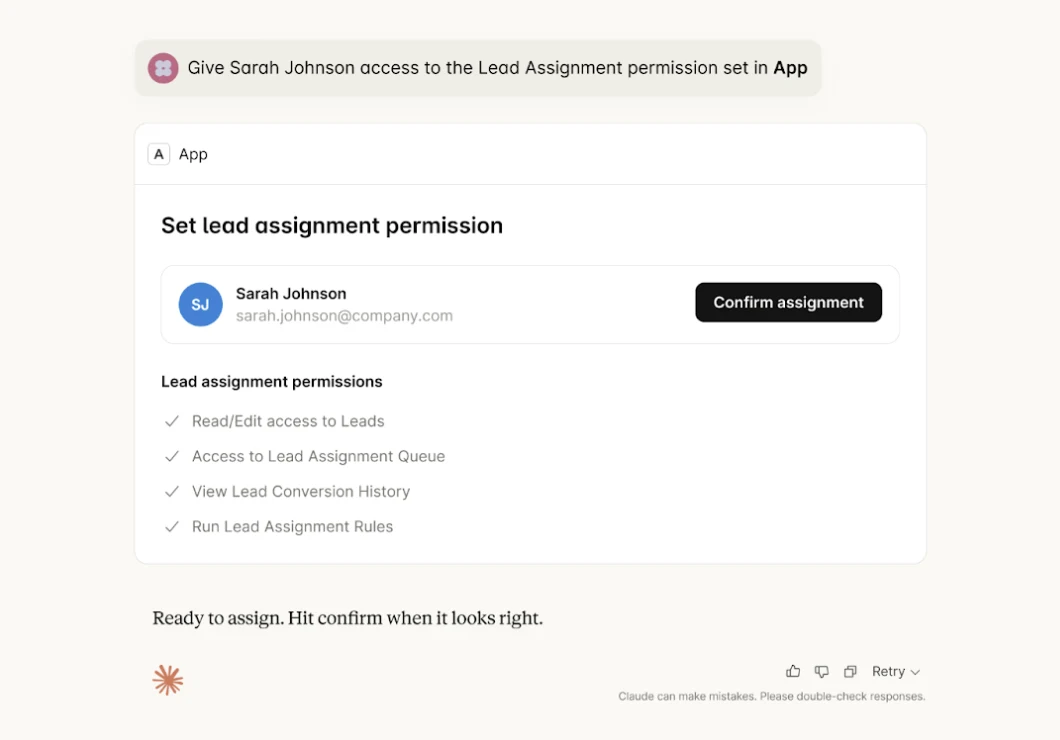
A specific, honest prompt. Ask at the moment the feature is first useful, in plain words: what will be read, why, whether anything leaves the device, and how to turn it off. The operating system's permission dialog is not enough on its own; it says what the app can access, not what your feature does with it. The same pattern works inside AI assistants: an in-context confirmation that says exactly what will happen before it does6.
Minimum access. Ask for the narrowest access that works: selected photos rather than the whole gallery, one folder rather than all files, approximate rather than precise location.
Records. Keep a record of what each user agreed to, when and in which version of the prompt, so you can show it later and re-ask when the feature changes.
Same rules for models. If device content is sent to a server or a third-party model, say so, minimise it and apply your normal data protection controls. If it is used to train models, that is a separate purpose needing its own basis.
On-device processing is good engineering, not a legal shortcut. In the EU, if your feature reaches into the phone, ask first, ask specifically and start switched off.
A quick review for existing features
- ListEvery feature that reads data from users' devices
- ClassifyWhat it reads and whether it is strictly necessary for a user request
- Check defaultsAnything not strictly necessary should start off
- Check promptsIs consent specific, honest and separate?
- MinimiseNarrow access to what the feature needs
- RecordStore consent with prompt version and date
CTO take
This fine is about consent and defaults, not about whether the feature was useful. As products add AI that looks for more context, the easiest way to stay on the right side of EU rules is to treat device content as something users lend you deliberately, not something you collect because the permission dialog allowed it. Product, engineering and legal should review device-reading features together, and new AI features should come with a consent design from day one. Meta has said it will appeal, so the decision may change; the design principles will not. Read alongside the 16 November tech news, the data protection programme case study and the Europe page.
How I can help
I help product and engineering teams design AI features that respect privacy rules by default, from consent flows to data minimisation. I am based in India, the United States and the UAE, working globally. See AI architecture, where I work, or analyse your challenge and bring the result to a call.
- 1Meta Fined €805 Million in Italy Over Facebook's Default Photo Gallery AccessSecurity Affairs · Nov 2026
- 2Italy's data protection authority fines Meta €805 millionDigital Watch Observatory · Nov 2026
- 3
- 4
- 5Guidelines 2/2023 on Technical Scope of Art. 5(3) of ePrivacy Directive, Version 2.0European Data Protection Board · 7 Oct 2024
- 6MCP Apps: Extending servers with interactive user interfacesModel Context Protocol Blog · 21 Nov 2025