Why most AI briefings fail
Boards do not need to understand transformers. They need to know whether AI is creating value, what could go wrong, whether management has it under control and what they must decide. Briefings fail when they answer a different question: technical detail directors cannot judge, or optimistic demos that hide risk. The fix is a consistent structure, repeated every time, so directors can see change over time.
Established frameworks help. The NIST AI Risk Management Framework organises the work into governing, mapping, measuring and managing AI risk1, and ISO/IEC 42001 sets out requirements for an AI management system2. You do not need certification to borrow their structure; it gives directors and auditors a vocabulary they will increasingly recognise.
The checklist
1. An inventory of AI in use. One page listing each significant use: what it does, who uses it, whether customers see it, what data it touches and who owns it. Include AI inside bought software, not only what you build. If you cannot produce this page, that is the first finding.
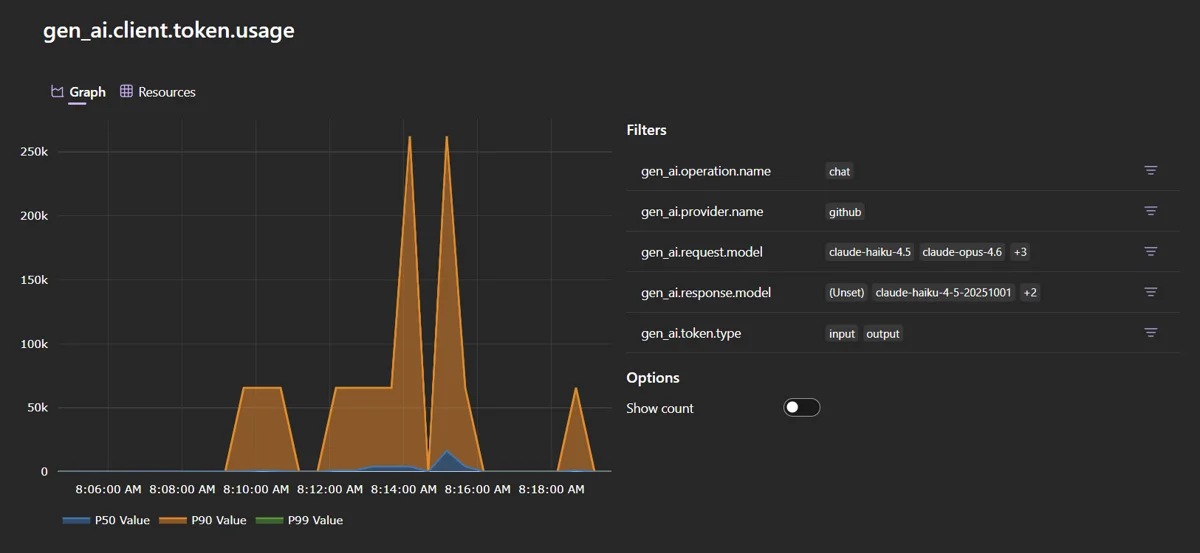
2. Value and cost. For each major use, what it costs (models, infrastructure, people) and what it returns, in the board's terms: revenue, cost avoided, time saved, risk reduced. Show trends, not just a snapshot. Telemetry recording model, tokens and outcome per call makes this possible6.
3. The top risks and how they are controlled. Five or six risks at most, each with its controls and how you know they work: wrong or harmful outputs, data exposure, agents acting beyond their scope, supplier failure, bias in decisions about people, and cost overruns. Say plainly which are under control and which are not.
4. Supplier dependence. Which model and infrastructure providers you rely on, what you send them, and how quickly you could move. Recent breaches at AI providers, and outages at major platforms, make this a board-level question; see AI inference providers are supply chain.
5. Rules by market. Which laws apply where you operate: the EU AI Act's obligations, including AI literacy for staff4; new national regimes such as Australia's planned rules for frontier developers5; data protection and sector rules. Show what is in force, what is coming and what you are doing about each.
6. Incidents and near misses. What went wrong since the last briefing, including near misses, and what changed as a result. A briefing with no incidents usually means incidents are not being recorded.
7. Principles and red lines. What the company will not do with AI, aligned with widely accepted principles such as the OECD's on transparency, robustness and accountability3. Directors should approve these, not just note them.
8. Decisions for the board. End with specific asks: approve a risk appetite statement, fund a capability, accept or reject a risk, agree a red line. A briefing without a decision is an update, and boards stop reading updates.
A one-page format
| Section | What goes in it | Signal to watch |
|---|---|---|
| Inventory | Uses, owners, data, customer-facing or not | New uses appearing without review |
| Value and cost | Cost and return per major use | Cost rising faster than value |
| Risks | Top risks, controls, status | Risks stuck at "not controlled" |
| Suppliers | Key providers, data shared, exit time | Single points of failure |
| Rules | Laws by market, deadlines, actions | Deadlines without owners |
| Incidents | What happened, what changed | No incidents reported at all |
| Decisions | Specific asks of the board | Decisions deferred repeatedly |
Boards govern what they can see. Give them the same few pages every time, with trends, red flags and a decision, and they will govern AI as well as they govern anything else.
How to build it the first time
- Survey teams
- Check bought software
- Name owners
- Costs per use
- Value evidence
- Supplier list
- Top risks and controls
- Laws by market
- Incident log
- Draft decisions
- Pre-brief the chair
- Present and record
Pre-brief the chair and any director with a technology or risk background before the meeting. It improves the questions you get and avoids surprises. Afterwards, record the decisions and fold them into the next briefing.
CTO take
AI governance is not a separate discipline from running a technology function well; it is the same discipline applied to a fast-moving area. The CTO's job is to make AI legible to the board: what it is, what it is worth, what could go wrong and what they need to decide. Doing that well also forces the inventory, cost tracking and risk controls that the organisation needs anyway. See a fractional CTO's first 90 days, AI literacy under the EU AI Act and the AI governance programme case study.
How I can help
I help leadership teams build AI inventories, risk controls and board reporting that lead to decisions, as part of fractional CTO engagements. I am based in India, the United States and the UAE, working globally. See fractional CTO work, where I work, or analyse your challenge and bring the result to a call.
- 1AI Risk Management FrameworkNIST · 2023
- 2
- 3OECD AI PrinciplesOECD · 2024
- 4Regulation (EU) 2024/1689 (Artificial Intelligence Act)EUR-Lex · 2024
- 5New Australian AI safety and security protectionsPrime Minister of Australia · 10 Nov 2026
- 6Inside the LLM Call: GenAI Observability with OpenTelemetryOpenTelemetry blog · 14 May 2026