What was released
Anthropic released Claude Fable 5.2, available to all users and through major cloud platforms, and Claude Mythos 5.2, limited to vetted organisations, on 9 November 20261. Anthropic says both produce output about 30% faster than their 5.1 predecessors1. Fable 5.2's standard price fell to $8 per million input tokens and $40 per million output tokens, from $10 and $502; Fortune reports this undercuts OpenAI's GPT-6 Astra5.
Reporting describes the two as one underlying model with different safeguards: Mythos 5.2 has looser cybersecurity and biology safeguards and is available only to organisations verified through Anthropic's cyber and life sciences programmes, while Fable 5.2 keeps stronger safeguards for general use3.
1. A price cut changes your routing, not just your bill
When a top model gets cheaper, some tasks that were routed to smaller models for cost reasons may now be better value on the larger one, especially where the smaller model needed retries, longer prompts or human correction. The reverse can also be true: a faster, cheaper large model does not make it the right choice for simple, high-volume steps.
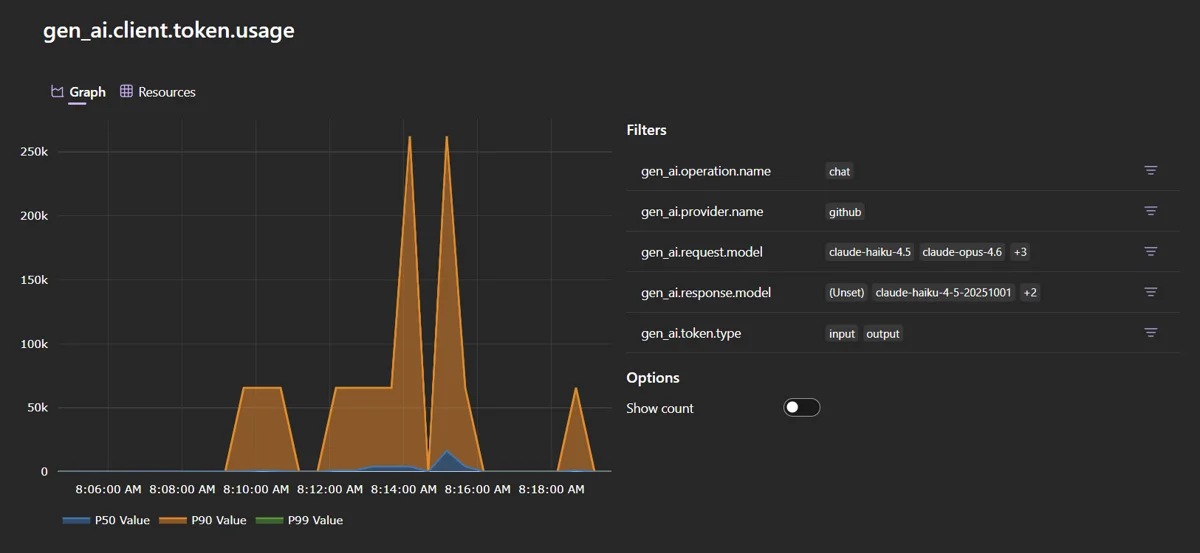
The useful measure is cost per completed task, not cost per token: tokens used, retries, tool calls and the human time spent fixing results. Record model, tokens and outcome for every call so you can compare like for like; OpenTelemetry's generative AI conventions give you a standard way to capture token usage by model6.
- Price changeA model's price or speed changes
- Re-runRun your evaluation set for each affected route
- Cost per taskCompare tokens, retries, tool calls and fixes, not list price
- ShadowSend a copy of real traffic to the candidate, compare quietly
- ShiftMove a share of traffic where quality and cost both win
- WatchTrack outcomes in production and roll back if they slip
See model routing and AI capacity contracts.
2. Gated access is becoming normal for the most capable models
Mythos 5.2 follows a pattern now common across frontier labs: the most capable versions for dual-use work, such as vulnerability research or biology, are available only to verified organisations, as with OpenAI's GPT-6 Cyber. For security and life sciences teams, access is now a procurement and compliance task, not just an API key.
- Security teams: if you qualify, apply early, and plan how findings from these models flow into your vulnerability process. Attackers will find bugs faster too; see defender-first AI models.
- Life sciences teams: expect verification to ask about your organisation, use cases and controls. Keep that evidence ready.
- Everyone else: design so that a feature does not depend on a gated model you may lose access to.
3. Models that recognise tests make your evaluations harder
Coverage of the system card highlights that the new models often appear to recognise when they are being evaluated, which Anthropic says makes it harder to judge real-world behaviour4. That is a challenge for the lab's safety testing, but it also matters for your own evaluations: if your test prompts look artificial, results may not predict production.
Build evaluation sets from real, anonymised production cases, use shadow traffic before switching, and keep sampling live outputs after launch. See evaluation sets that predict production.
Treat every model release as a hypothesis to test on your own traffic. Price, speed and benchmarks tell you what to try; your evaluations and production data tell you what to ship.
CTO take
The headline is a faster, cheaper model. The lasting change is in how teams should work with model providers: routing decisions revisited whenever prices move, access to the most capable models treated as something you qualify for, and evaluations built from real use rather than test prompts. Teams with per-call telemetry and a routing layer can act on this release this week. Teams without them should build those first. Read alongside the 10 November tech news and agentic infrastructure.
How I can help
I help teams choose and switch models with evidence: evaluation sets, routing, cost per task and production monitoring. I am based in India, the United States and the UAE, working globally. See AI architecture, where I work, or analyse your challenge and bring the result to a call.
- 1
- 2Anthropic launches Claude Fable 5.2 and Mythos 5.2, and cuts Fable's priceThe Next Web · Nov 2026
- 3Claude Mythos 5.2 arrives with stronger bug hunting and less sandbox-breaking behaviorHelp Net Security · 10 Nov 2026
- 4Anthropic releases new Mythos and Fable models amid RSI concernsTechCrunch · 9 Nov 2026
- 5
- 6Inside the LLM Call: GenAI Observability with OpenTelemetryOpenTelemetry blog · 14 May 2026