An old idea, newly practical
"Lights out" manufacturing is not new. The idea of factories that run unattended has been around for decades, and the term "dark factory" comes from plants that can operate with the lights off because no one needs to see4. What is new is how fast the enabling technology is spreading. The International Federation of Robotics reported in September 2026 that China installed about 354,000 industrial robots in 2025, around 59% of new installations worldwide12.
Even so, fully dark plants remain rare. In a September 2026 report on car manufacturing, experts said they knew of no fully lights-out mass vehicle plant, though some plants have sections where people are hardly seen3. The reality is a spectrum: more of each line runs unattended, while people handle changeovers, maintenance, exceptions and quality decisions.
The same idea, applied to software
In 2026 the term crossed into software. A "dark software factory" is a pipeline where AI agents plan, write, test and ship code with little or no human reading of it. The most discussed example is a security company's small team that described a factory where humans write specifications and watch scores while agents do the rest, a model the Stanford CodeX blog questioned on the grounds of who can trust agent-validated testing7.
The more careful voices draw a lesson from manufacturing. OpenHands argues that the history matters more than the metaphor, and that the approach works best for well-defined work where correctness can be checked automatically5. Addy Osmani describes a spectrum between "light" and "dark" factories, rather than a switch6. That matches the factory floor: most of the value comes long before the last person leaves.
And to back offices
The same pattern is arriving in knowledge work: claims processing, reconciliation, document review, customer service. AI agents read inputs, apply rules and draft outputs, and people review exceptions. The site's case studies show where this works and where it should stop, from repairs triage at a housing association to maintenance planning at an industrial operator. In both, the agents do the reading and drafting, and people keep the decisions that affect customers or physical assets.
What has to be true before you turn the lights off
Whether the line makes phones, software or insurance decisions, the preconditions look the same.
1. You can say precisely what "good" is. A machine can only hit a target it can measure. In software, that means executable specifications and tests that the agents cannot see or edit, so they cannot game them. In back offices, it means written rules and examples of correct outcomes.
2. You can check every output automatically. If quality depends on a person looking, the line is not dark; it has a hidden bottleneck. Invest in verification before generation. See evaluating AI agents.
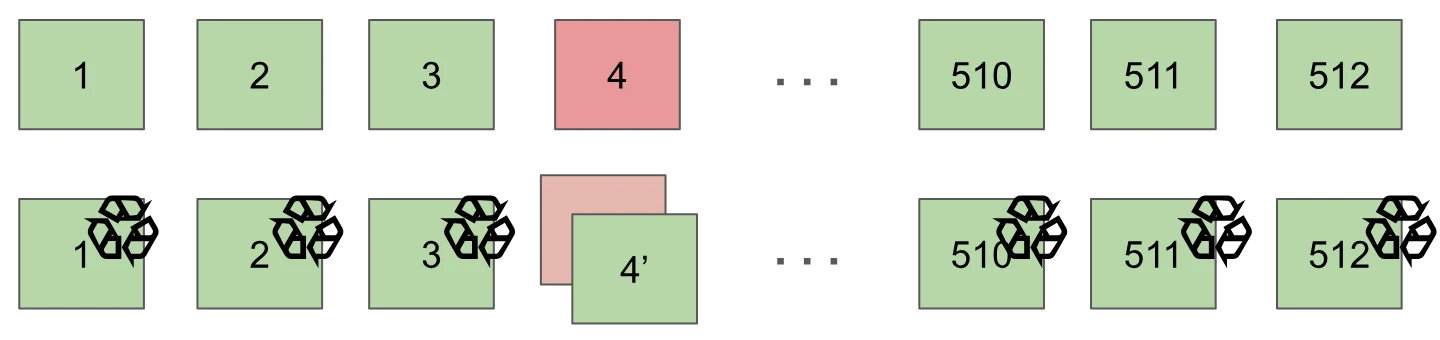
3. Failures are contained and cheap to undo. Factories isolate a faulty station and replace a part without stopping the line. Software platforms do the same: detect the failed unit, replace it and keep everything else running, as the Kubernetes community describes for large distributed jobs8.
4. Someone can stop the line. Every serious factory has a stop button and someone accountable for pressing it. For agents, that means identity per agent, limits on what each can do, and a way to stop one instantly; see the 4 November tech news on agent kill switches and agent sandboxing.
5. People still understand the system. A plant whose engineers no longer understand its machines cannot improve it or recover from novel failures. A codebase nobody reads builds the same "comprehension debt". Keep people reading the parts that matter most, and design for explainability.
Dark factories are not built by removing people. They are built by making quality measurable, failure recoverable and control explicit, and then removing people from the parts where those three are true.
A sensible path
- Define good outcomes
- Build automatic checks
- Baseline today's quality
- Automate well-specified steps
- People review every output
- Track where reviews change nothing
- Remove review where checks are reliable
- People handle exceptions
- Stop button and limits
- Fully unattended for narrow, reversible work
- Regular audits
- Keep people who understand it
What it means for teams and hiring
In factories and software alike, the work shifts rather than disappears. Fewer people do the repetitive middle; more of the value sits in specifying what good looks like, building the checks, designing for recovery and handling the exceptions machines cannot. Those roles need deeper understanding of the system, not less. Teams that cut the people who understand the system to fund automation tend to find out why they needed them during the first serious incident. See Team Topologies for AI teams and AI coding policy for engineering teams.
CTO take
The dark factory is a useful destination to think about and a poor target to chase. The organisations getting real value, in manufacturing, software and back offices, are those that invest first in measurable quality, automatic checks, contained failure and clear control, and then automate as far as the evidence allows. That is a playbook any company can start on this quarter, whatever its sector or region. If you are deciding how far to automate, start with a fractional CTO's first 90 days or where I work.
How I can help
I help teams decide where automation and AI agents can safely run unattended, and build the specifications, checks and controls that make it possible. I am based in India, the United States and the UAE, working globally. See AI architecture or analyse your challenge and bring the result to a call.
- 1IFR World Robotics 2026: China press releaseInternational Federation of Robotics · 24 Sep 2026
- 2China installs 59% of new factory robots as EU installations fall 11%The Next Web · Sep 2026
- 3Fast-improving AI, robotics could make 'dark' auto factories a realityThe Spokesman-Review · 29 Sep 2026
- 4Lights out (manufacturing)Wikipedia
- 5
- 6Software Factories, Light and DarkAddy Osmani · 2026
- 7Built by Agents, Tested by Agents, Trusted by Whom?Stanford Law School CodeX · 8 Feb 2026
- 8Navigating Failures in Pods With DevicesKubernetes blog · 3 Jul 2025